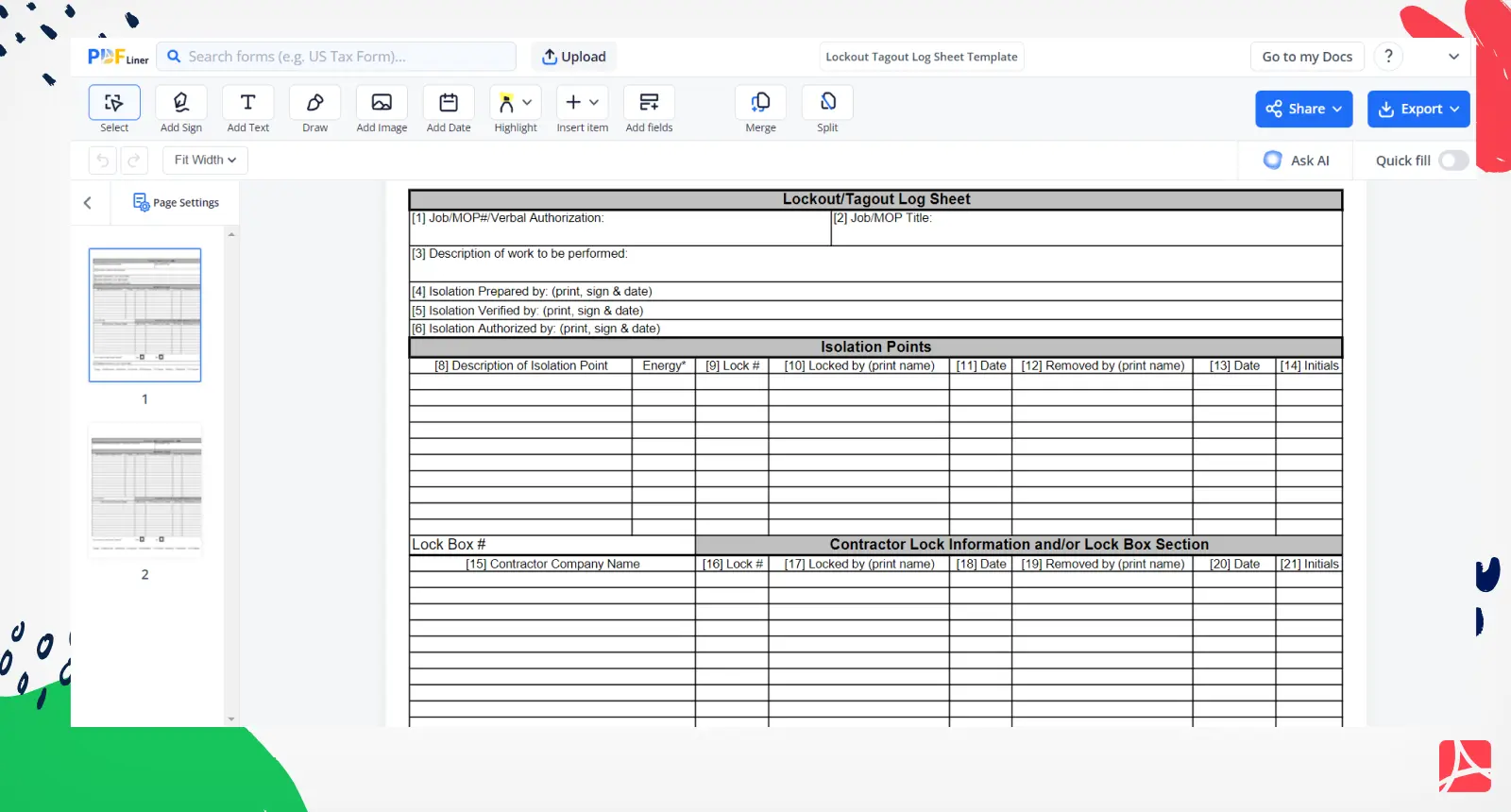
Every year, hundreds of preventable workplace injuries occur during equipment servicing—despite the existence of a proven defense: a well-documented lockout tagout (LOTO) written procedure. The problem isn’t a lack of regulations. It’s the assumption that simply having a generic template satisfies compliance.
A real lockout tagout written procedure isn’t a checkbox. It’s a living document tailored to specific machines, energy sources, and operational workflows. When done poorly, it creates a false sense of security. When done right, it stops unexpected energization, protects lives, and satisfies OSHA’s strict standards under 29 CFR 1910.147.
This guide breaks down how to build, maintain, and enforce a LOTO written procedure that actually works—on the floor, not just on paper.
What Is a Lockout Tagout Written Procedure?
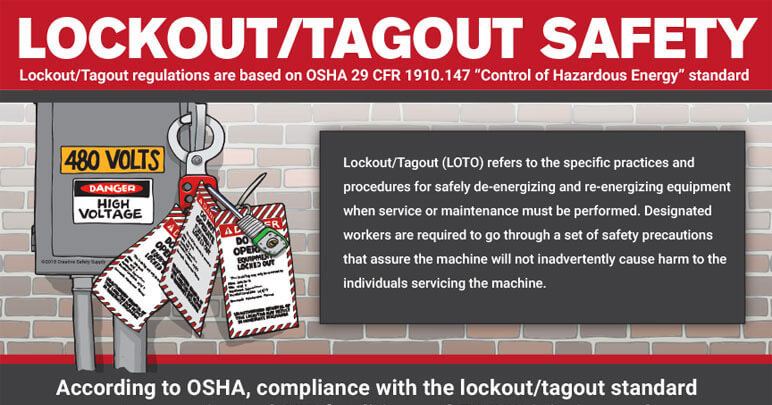
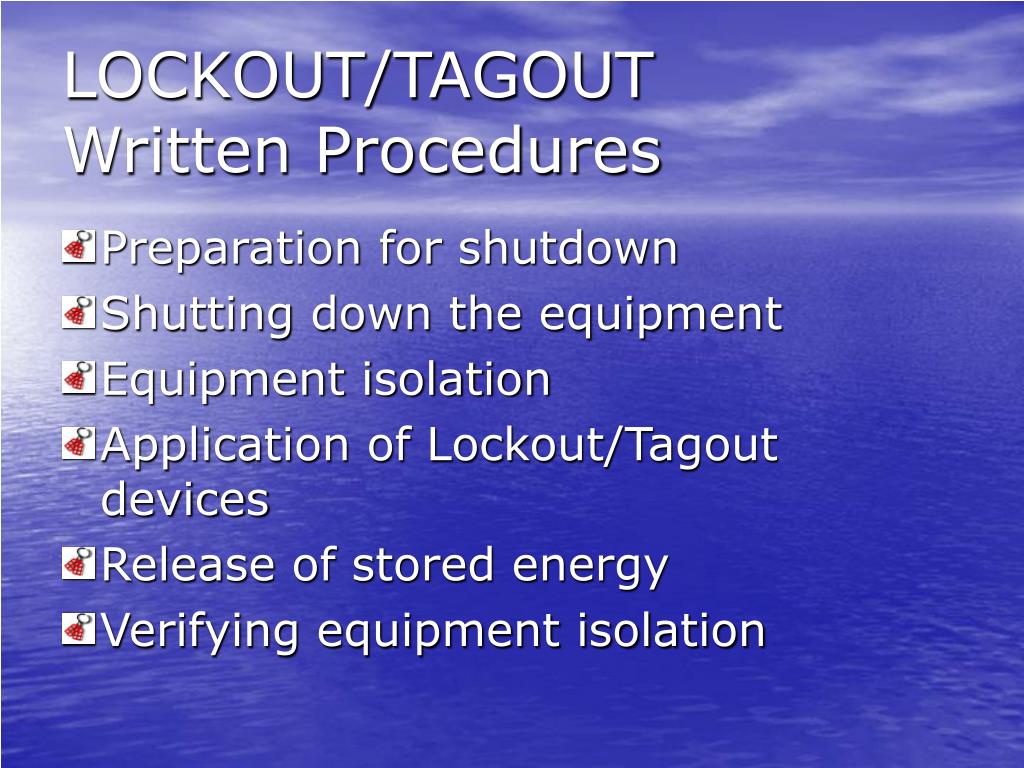
A lockout tagout written procedure is a step-by-step instruction set that details how to safely de-energize, isolate, and secure machinery or equipment before maintenance or servicing. It specifies the sequence of shutdown, isolation, lock application, verification, and release.
Unlike general safety policies, a LOTO procedure is machine-specific and action-oriented. It’s not enough to say “lock out the machine.” The procedure must answer:
- Which energy sources are involved? (electrical, hydraulic, pneumatic, chemical, thermal, etc.)
- Where are isolation points located?
- What locks and tags will be used?
- Who is authorized to perform the procedure?
- How is zero energy verified?
These documents are required by OSHA for any equipment that could release hazardous energy during service.
Key Components of Every LOTO Written Procedure
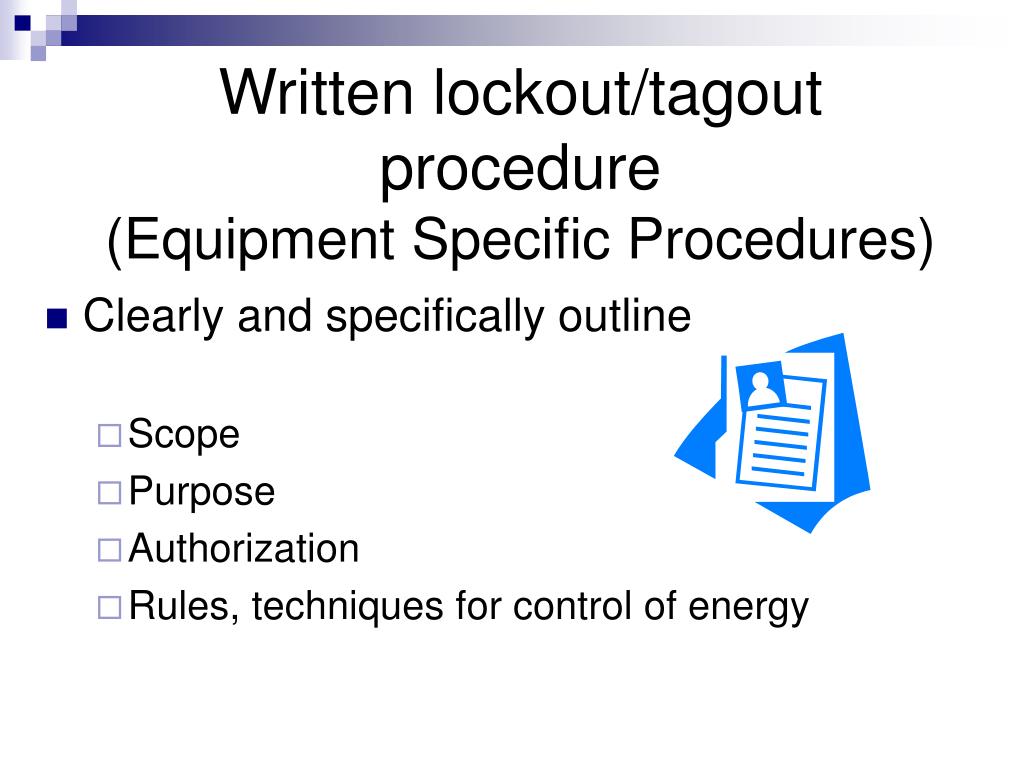
Each procedure must include the following elements to be compliant and effective:
- Machine or Equipment Identification – Name, model, location, or ID number.
- Energy Sources – Detailed list (e.g., 480V electrical feed, 120 psi pneumatic line).
- Shutdown Steps – Sequence for powering down safely.
- Isolation Points – Exact valves, breakers, or disconnects to engage.
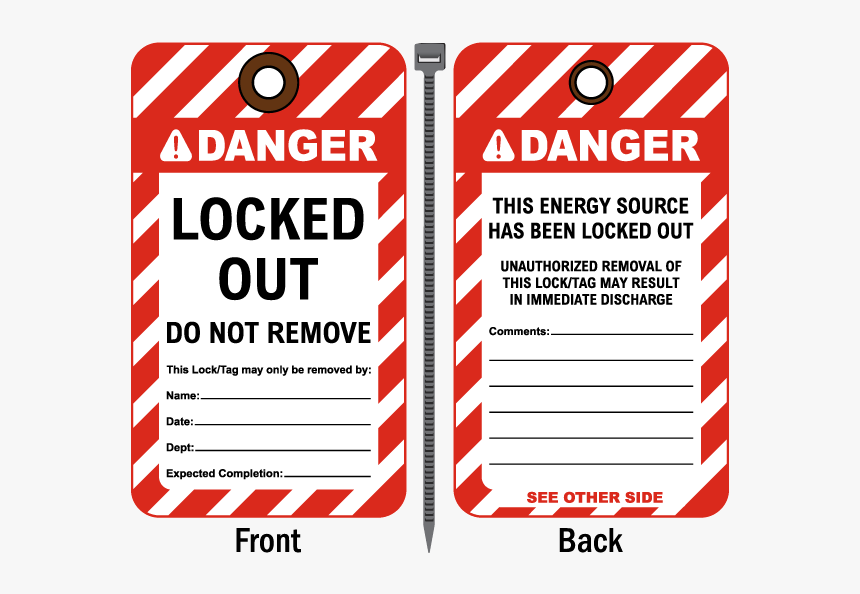
- Lock and Tag Application – Who applies them and how many.
- Stored Energy Release – Depressurizing, draining, or blocking residual energy.
- Verification of Isolation – How to confirm zero energy state (e.g., test run).
- Removal Procedure – Steps for re-energizing only after maintenance is complete.
Without these components, even a documented process fails under audit.
Why Generic Templates Fail in Real Facilities
Many companies download free LOTO templates from the web, fill in machine names, and call it compliant. That’s a dangerous shortcut.
A boilerplate procedure doesn’t account for:
- Unique machine configurations – Two identical presses in different locations might have different lockout points due to piping or electrical routing.
- Multiple energy sources – A packaging machine may use electricity, air pressure, and gravity-fed components. Missing one risks catastrophe.
- Workflow realities – Maintenance tasks vary. Cleaning a jam differs from replacing a motor. Each may need its own LOTO sub-procedure.
Example: A food processing plant used a single LOTO template for all conveyor lines. During a routine cleaning, a technician locked only the main electrical disconnect. Unseen residual tension in an overhead drive chain released when a guard was removed, causing a serious laceration. The procedure failed to include mechanical spring tension as an energy source.
Tailoring procedures to actual equipment prevents these oversights.
How to Build a Machine-Specific LOTO Procedure
Creating a compliant, practical procedure requires fieldwork—not just desk drafting.
Step 1: Conduct an Energy Source Audit
Walk the floor. For each machine, identify every form of energy:
- Electrical circuits
- Hydraulic/pneumatic lines
- Suspended parts or springs
- Gravity-fed systems
- Stored heat or chemicals
Use a checklist or digital form to document isolation points (e.g., breaker number, valve tag).
Step 2: Involve Authorized Employees
Authorized employees (those performing maintenance) must help draft procedures. They know:
- Where unexpected energy releases happen
- Which controls are hard to access
- What common shortcuts exist
Their input makes procedures usable, not theoretical.
Step 3: Write the Procedure Using Clear Language
Avoid technical jargon or vague terms like “secure the system.” Use active, imperative language:
“Close valve V-204 and lock in the closed position using a red hasp and personal lock.” > “Confirm 0 psi on gauge PG-12 before proceeding.”
Include diagrams or photos if possible—especially for complex isolation sequences.
Step 4: Verify
with a Live Demonstration
Before finalizing, perform a “dry run” with the written steps. Can the technician follow them without confusion? Does the lock placement prevent re-energization?
Fix gaps immediately.
Common Mistakes That Invalidate LOTO Procedures
Even facilities with written procedures often undermine their effectiveness through routine errors.
Mistake 1: One Procedure for Multiple Machines
Using a single LOTO document for similar machines ignores configuration differences. Each machine needs its own documented process—even if 90% identical.
Mistake 2: Omitting Stored Energy
Many procedures list electrical isolation but skip mechanical or thermal energy. Springs, elevated parts, capacitors, and pressurized lines must be addressed.
Mistake 3: Skipping Verification
Locks and tags mean nothing if zero energy isn’t verified. The procedure must require testing—like trying to start the machine after lockout.
“Attempt to start the motor at the control panel. Confirm no movement or response before beginning work.”
Mistake 4: Poor Accessibility
Storing LOTO procedures in a binder in the manager’s office defeats their purpose. They must be:
- Posted near equipment
- Available digitally via tablets or QR codes
- Included in training materials
Mistake 5: Not Reviewing Annually
Equipment changes. Procedures become outdated. OSHA requires annual certification that procedures are still accurate and effective.
Document the review date, who performed it, and any updates made.
Integrating LOTO Procedures into Daily Operations
A written procedure is useless if not actively used.
Training and Authorization
Only “authorized employees” can perform LOTO. They must be trained on:
- The energy sources of each machine
- The specific written procedure for that equipment
- Lock and tag application and removal
- Periodic inspection requirements
“Affected employees” (operators) need awareness training—knowing not to remove locks or bypass safeguards.
Procedure Inspections
Monthly, a supervisor must audit one LOTO event per machine. This includes:
- Watching an authorized employee perform lockout
- Confirming all steps were followed
- Checking lock/tag condition
- Verifying isolation and testing
Document findings and correct deficiencies.
Digital Tools for Better Compliance
Paper binders are error-prone. Modern facilities use digital solutions:
| Tool | Use Case |
|---|---|
| CMMS with LOTO module | Attach procedures to work orders; track compliance |
| QR code systems | Scan a tag to pull up the correct LOTO steps on a phone |
| Tablet-based audits | Supervisors complete inspection forms in real time |
| Cloud document management | Ensure all procedures are up to date and accessible |
These tools reduce human error and improve audit readiness.
Real-World Example: LOTO Procedure for a Hydraulic Press
Equipment: 100-ton Hydraulic Press, Model HP-100 (Line 3)
Energy Sources: - 480V 3-phase electrical supply - 2,500 psi hydraulic system - Gravity-fed die descent
Written Procedure Steps:
- Notify all affected employees that maintenance is beginning.
- Press emergency stop button. Switch control mode to “Maintenance.”
- Open main disconnect breaker (BD-101) and apply personal lock and tag.
- Close hydraulic isolation valve (HV-302) and lock in closed position.
- Activate manual bleed valve (BV-15) to release system pressure. Confirm 0 psi on gauge.
- Lower upper die fully to relieve spring tension. Insert safety blocks.
- Attempt a start cycle using the control panel. Confirm no response.
- Begin maintenance.
Removal: - Confirm all tools removed and guards reinstalled. - Remove personal locks only by the individual who applied them. - Notify affected employees before re-energizing.
This specificity prevents ambiguity and ensures safety.
The Cost of Non-Compliance
Failing to implement proper LOTO written procedures isn’t just dangerous—it’s expensive.
- OSHA fines: Violations of 1910.147 can cost over $15,000 per instance.
- Downtime: Accidents halt production, delay orders, and damage reputation.
- Workers’ comp claims: Injuries during servicing lead to higher premiums and legal exposure.
More importantly, the human cost is irreversible. A momentary lapse due to a flawed procedure can result in amputation, electrocution, or death.
Final Checklist: Is Your LOTO Written Procedure Effective?
Before your next audit, verify:
✅ Each machine has a unique, documented procedure ✅ All energy sources are identified and addressed ✅ Steps include shutdown, isolation, lock/tag, release, and verification ✅ Procedures are written in clear, actionable language ✅ Authorized employees helped develop and understand them ✅ Procedures are easily accessible at the point of use ✅ Annual review and certification are documented ✅ Monthly inspections are performed and recorded
If any item is missing, your compliance is at risk.
Build procedures that reflect real-world conditions—not regulatory assumptions. A true lockout tagout written procedure doesn’t just satisfy OSHA. It protects the people who keep your operations running. Start with one machine. Get it right. Then scale. Safety isn’t a policy—it’s a practice.
FAQ
What should you look for in Lockout Tagout Written Procedure: A Complete Guide for Compliance and Sa? Focus on relevance, practical value, and how well the solution matches real user intent.
Is Lockout Tagout Written Procedure: A Complete Guide for Compliance and Sa suitable for beginners? That depends on the workflow, but a clear step-by-step approach usually makes it easier to start.
How do you compare options around Lockout Tagout Written Procedure: A Complete Guide for Compliance and Sa? Compare features, trust signals, limitations, pricing, and ease of implementation.
What mistakes should you avoid? Avoid generic choices, weak validation, and decisions based only on marketing claims.
What is the next best step? Shortlist the most relevant options, validate them quickly, and refine from real-world results.