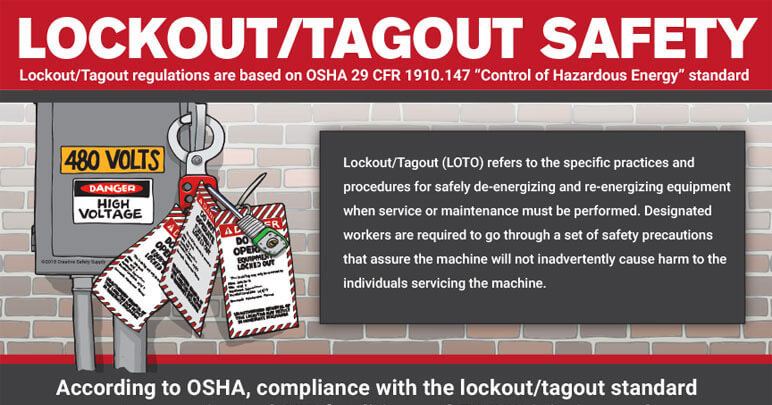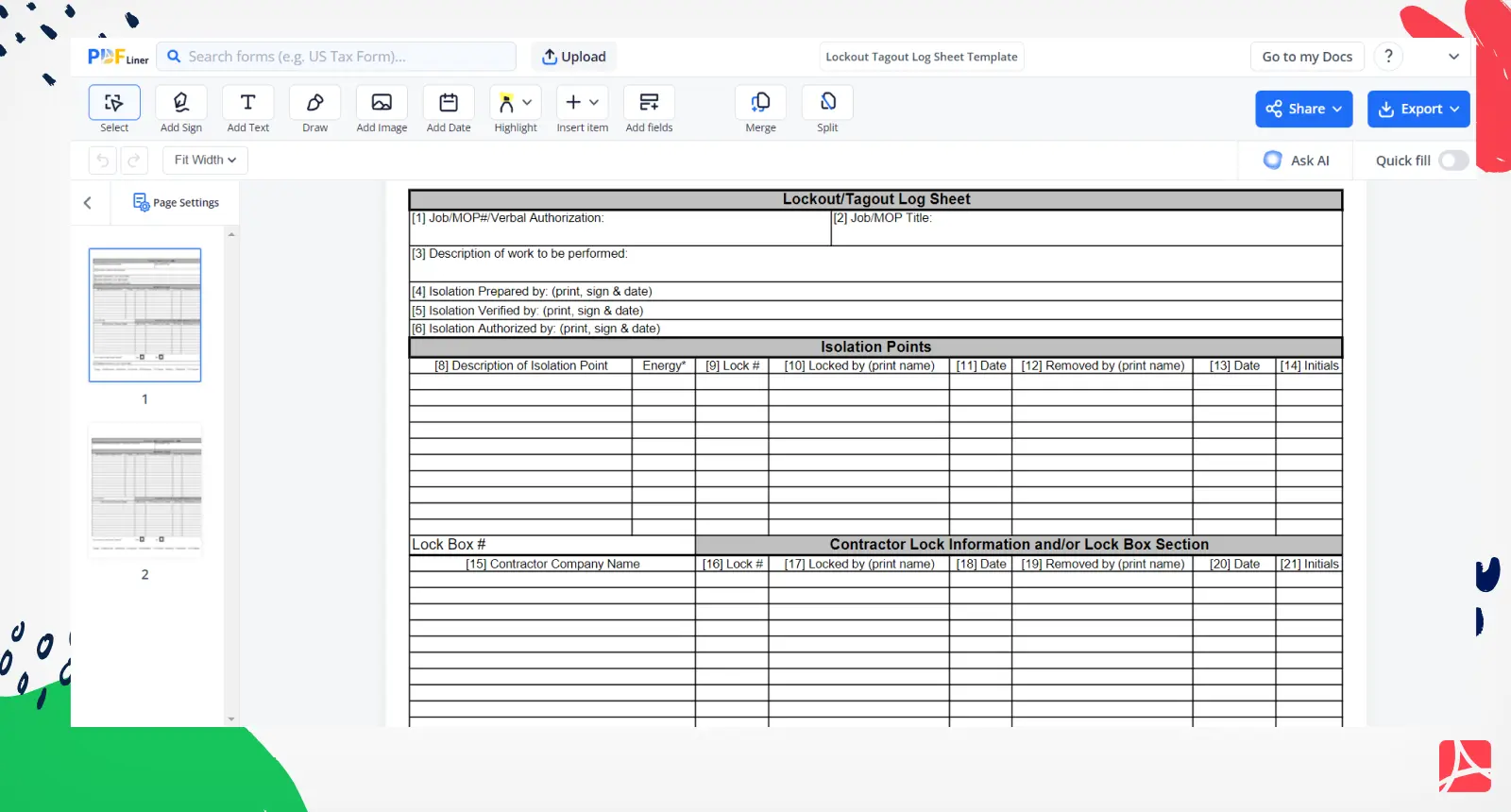
Every year, preventable accidents occur during equipment servicing because one critical step was overlooked: documenting the lockout tagout (LOTO) process. The lockout tagout log isn’t just paperwork—it’s evidence of safety, accountability, and compliance. When a machine is shut down for maintenance, the log becomes the official record that energy sources are isolated, workers are protected, and procedures were followed.
Yet, in too many facilities, this log is treated as an afterthought—filled out late, incompletely, or not at all. That lapse can turn a routine repair into a catastrophic injury.
This guide cuts through the noise to show you exactly what a lockout tagout log should include, how to implement it effectively, and the real-world consequences of getting it wrong.
Why a Lockout Tagout Log Is Non-Negotiable
The core principle of LOTO is simple: control hazardous energy. But without a log, there’s no way to verify that controls were applied correctly.
OSHA standard 29 CFR 1910.147 requires employers to document each instance of energy isolation. The log serves as:
- A legal record during inspections
- A communication tool between shifts
- A training resource for new employees
- A forensic tool if an incident occurs
Consider this scenario: A maintenance technician services a conveyor system. Three locks were applied by three different workers. One goes to lunch; another steps out for supplies. Without a log, a supervisor might assume the work is complete and restart the system. The result? A crushing injury.
The log prevents this by clearly stating who locked out, when, on what equipment, and why.
What Belongs in a Proper Lockout Tagout Log
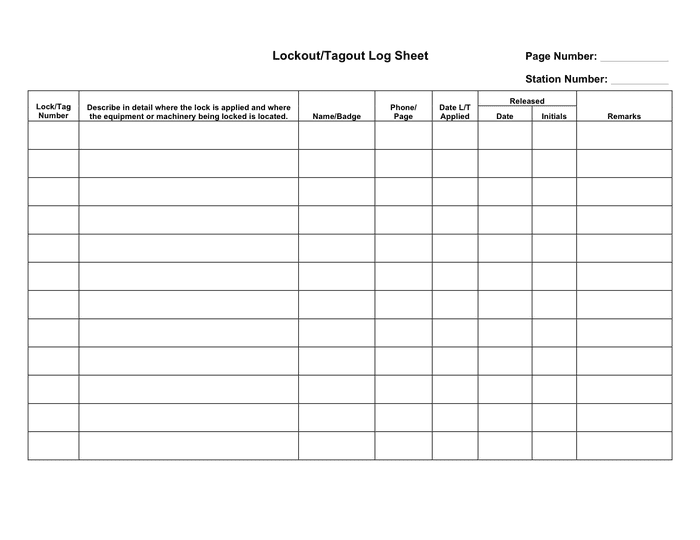
A useful log isn’t a blank notebook. It’s a structured form designed to capture key data consistently. Here’s what every entry should include:
Mandatory Fields
| Field | Purpose | Example |
|---|---|---|
| Date & Time (Start/End) | Tracks duration of lockout | 03/14 08:15 AM → 10:30 AM |
| Equipment ID | Identifies the machine or system | Conveyor Line C-7 |
| Type of Energy Isolated | Lists energy sources (electrical, hydraulic, pneumatic, etc.) | 480V electrical, compressed air |
| Authorized Employee | Full name and ID of the person applying lock/tag | Maria Chen (ID: MC228) |
| Department/Shift | Context for cross-team coordination | Night Shift – Maintenance |
| Reason for Lockout | Brief description of work being performed | Replace drive motor bearings |
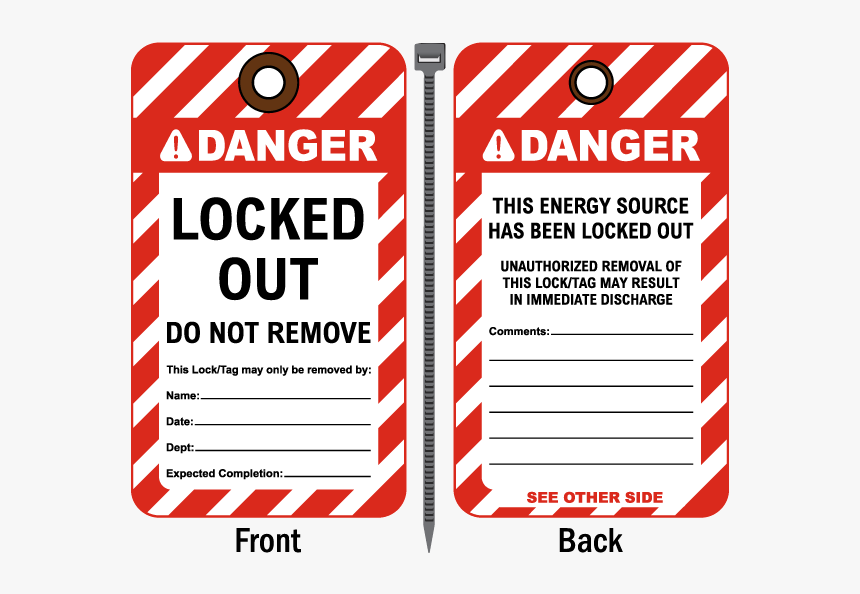
| Lock/Tag ID Number | Unique identifier for each device used | LK-045, TAG-088 |
| Supervisor Approval | Verification by responsible manager | J. Rivera (signed) |
| Clearance Confirmation | Proof all workers are clear before re-energizing | All personnel accounted for |

Leaving any of these fields blank compromises the log’s integrity. In one real case, a plant was fined $70,000 because logs lacked start/end times, making it impossible to confirm whether isolation periods overlapped with operational windows.
Common Mistakes That Undermine LOTO Logs
Even organizations with strong safety cultures make errors that weaken their logs. Recognizing these pitfalls is the first step to fixing them.
1. Using Generic Logs Across Equipment Types
A single log form for all machines often misses critical details. Hydraulic presses require different energy checks than robotic arms. Customize log templates by equipment class.
2. Delayed or Retroactive Entries
“Filling it in later” leads to inaccuracies. One technician logged a lockout at 9:00 AM but didn’t apply the lock until 9:22 AM. During that window, another worker nearly activated the machine.
3. Missing Multi-Craft Coordination
In complex systems, electricians, mechanics, and operators may all apply locks. If only one logs their action, others’ protections go unrecorded. Use group lockout logs with individual sign-offs.
4. Failure to Archive
OSHA requires LOTO records to be retained for at least one year. Digital systems help, but printed logs often end up lost, discarded, or stored in unmarked binders.
Digital vs. Paper Lockout Tagout Logs: What Works Best?
The shift from paper to digital logs is accelerating. But which approach delivers real value?
Paper Logs: Pros and Cons
Pros: - Low cost and easy to deploy - No training required for basic use - Functional in remote or offline environments
Cons: - Prone to illegible handwriting - Difficult to search or audit - Easily damaged or lost - No real-time alerts or validation
Digital Logs: Pros and Cons
Pros: - Automated timestamps and user authentication - Cloud backup and instant retrieval - Integration with CMMS or ERP systems - Real-time visibility for supervisors
Cons: - Upfront investment in software and devices - Requires Wi-Fi or cellular access - Training burden for older staff
In high-turnover or multi-site operations, digital systems reduce compliance risk significantly. One manufacturing chain cut LOTO violations by 68% within six months of switching to tablets with LOTO apps.
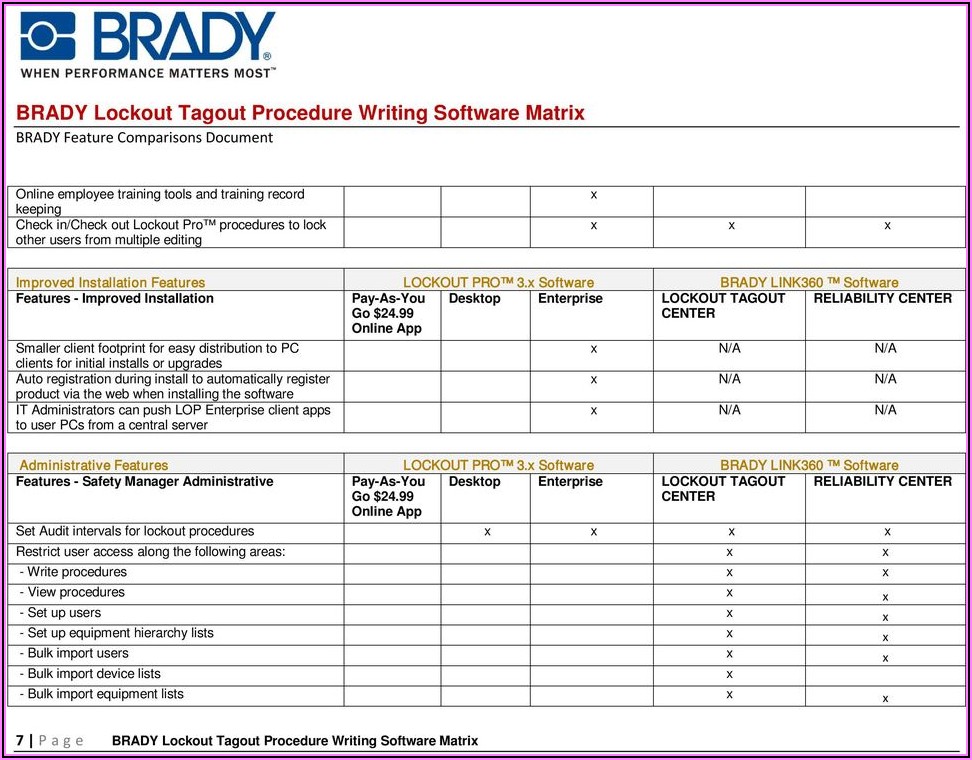
Top 5 Digital Lockout Tagout Log Platforms For teams ready to modernize, these platforms offer reliable tracking and compliance support:
- Lockout Tagout Pro by Safetec
- - Cloud-based with offline mode
- - Customizable templates per machine
- - Audit trail and OSHA-ready reporting
- - Ideal for mid to large manufacturers
- iLOCKOUT by Brady
- - Mobile app with barcode scanning
- - Supports group lockout workflows
- - Integrates with SAP and Maximo
- - Strong in chemical and utility sectors
- Lockout Hub
- - Simple interface, low learning curve
- - Real-time dashboard for managers
- - Affordable for small teams
- - Best for job shops and repair facilities
- EHS Insight – LOTO Module
- - Full EHS suite with incident tracking
- - Automated compliance reminders
- - Advanced analytics and trend reports
- - Suited for enterprise-level safety programs
- SafeSite Check In
- - Combines LOTO with site access control
- - GPS-tagged entries for field work
- - Photo documentation capability
- - Used heavily in construction and oil/gas
Choose based on team size, infrastructure, and integration needs. Avoid platforms that don’t support OSHA 1910.147 out of the box.
Real-World Use Cases: How Logs Prevent Disasters
Case 1: Preventing a Cascade Failure
At a food processing plant, a technician isolated a mixer for blade replacement. A second worker began cleaning an adjacent line, unaware of the lockout. The supervisor checked the central LOTO log, saw the active tag, and delayed startup. Later review showed the tagger had forgotten to notify operations—yet the log caught the conflict.
Case 2: Resolving a Near-Miss Investigation
After a motor re-energized prematurely during servicing, investigators reviewed the log. It revealed that two locks were listed—but only one was physically present. The missing lock belonged to a contractor who had removed it without logging clearance. The log provided irrefutable evidence for disciplinary action and process overhaul.
These cases prove the log isn’t just about compliance. It’s a living document that protects people when assumptions fail.
Best Practices for Maintaining an Effective LOTO Log
Follow these proven strategies to ensure your log remains accurate, accessible, and actionable:
- Standardize the Format
- Use consistent templates across departments. Include equipment-specific checklists.
- Train on the “Why,” Not Just the “How”
- Workers who understand the consequences of incomplete logs are more likely to comply.
- Audit Weekly
- Supervisors should spot-check 10% of entries weekly. Look for missing fields, time gaps, and unclear reasons.
- Integrate with Maintenance Schedules
- Link LOTO logs to work orders so lockouts trigger automatically in planning systems.
- Conduct Surprise Drills
- Simulate emergency restarts and verify that logs align with actual lock/tag status.
- Review Annually
- Update log forms based on incident data, equipment changes, or regulatory updates.
One plant reduced LOTO errors by 92% over two years simply by adding a “double-check” signature line and monthly audit reports.
Closing the Loop: From Record to Results
A lockout tagout log is only as strong as the culture behind it. No form, digital or paper, can replace vigilance, communication, and accountability. But when used correctly, the log becomes a cornerstone of safety—turning abstract procedures into documented, verifiable actions.
Don’t wait for an incident to validate its importance. Audit your current log system today. Are entries complete? Are they reviewed? Can you retrieve last month’s record in under two minutes?
If not, start now: standardize your format, train your team, and treat every log entry as a promise to protect someone’s life.
FAQ
What is the purpose of a lockout tagout log? It documents each LOTO event to ensure energy sources are properly isolated, workers are protected, and compliance with OSHA standards is maintained.
Who is responsible for filling out the LOTO log? The authorized employee performing the servicing or maintenance must complete the log, often with supervisor verification.
How long should lockout tagout logs be kept? OSHA requires retention for at least one year from the date of the log entry to allow for inspection and auditing.
Can multiple people use the same log entry? No—each authorized employee applying a lock or tag must be individually documented, especially during group lockouts.
Are digital LOTO logs OSHA-compliant? Yes, as long as they capture all required information, are protected from tampering, and are accessible for inspection.
Should contractors be included in the LOTO log? Absolutely. Any external worker performing servicing must be listed with their lock/tag ID and company details.
What happens if a LOTO log is incomplete? An incomplete log may invalidate the entire procedure during an audit and increase liability in the event of an accident.