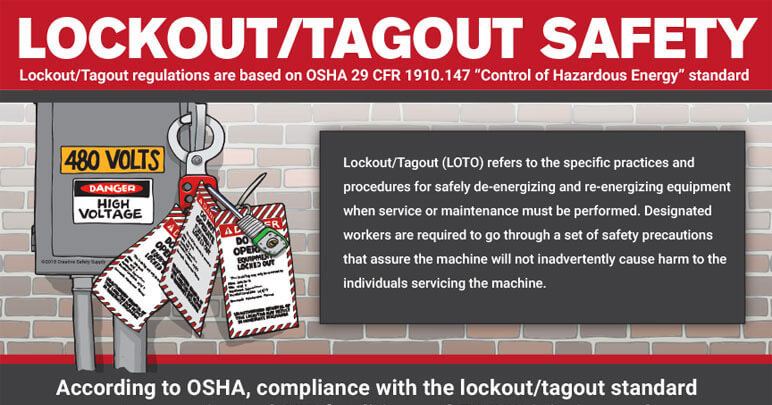
A single misstep with an energized electrical panel can end careers—or lives. Yet across maintenance bays, substations, and industrial plants, workers still routinely service live equipment because lockout tagout (LOTO) isn’t enforced, misunderstood, or worse, improvised. The electrical lockout tagout kit isn’t a bureaucratic formality—it’s the last physical barrier between a technician and a fatal arc flash. When done right, it turns chaos into control. When ignored, it turns routine maintenance into emergency response.
This isn’t about checking boxes. It’s about ensuring no one gets hurt because a circuit was accidentally re-energized.
Why an Electrical Lockout Tagout Kit Is Non-Negotiable
Electrical systems store lethal energy even when switched off. Capacitors discharge unpredictably. Backup generators kick in automatically. Control circuits loop back through shared panels. Without verified isolation, the risk of accidental re-energization remains high.
An electrical lockout tagout kit standardizes safety by ensuring every energy source is:
- Physically isolated
- Mechanically secured with locks
- Clearly tagged with warning labels
- Verified de-energized before work begins
OSHA 1910.147 outlines the core requirements, but compliance alone isn’t safety. The real value lies in how consistently and correctly the kit is used. Consider this: 60% of electrical injuries in industrial settings occur during servicing or maintenance—not operation. That’s a procedural failure, not an equipment failure.
Real-World Scenario: The Overlooked Sub-Panel
A maintenance technician shuts down a main breaker to repair a motor controller. Confident the system is dead, he begins disassembly. Unbeknownst to him, a secondary 120V control circuit is fed from a separate sub-panel—untagged, unlocked, and still live. When he probes the terminal block, the result is a flash burn and a week in recovery.
What failed? A proper electrical LOTO kit would have required lockout of all associated energy sources—not just the primary one. The kit’s contents enable that rigor.
What Belongs in a Standard Electrical Lockout Tagout Kit
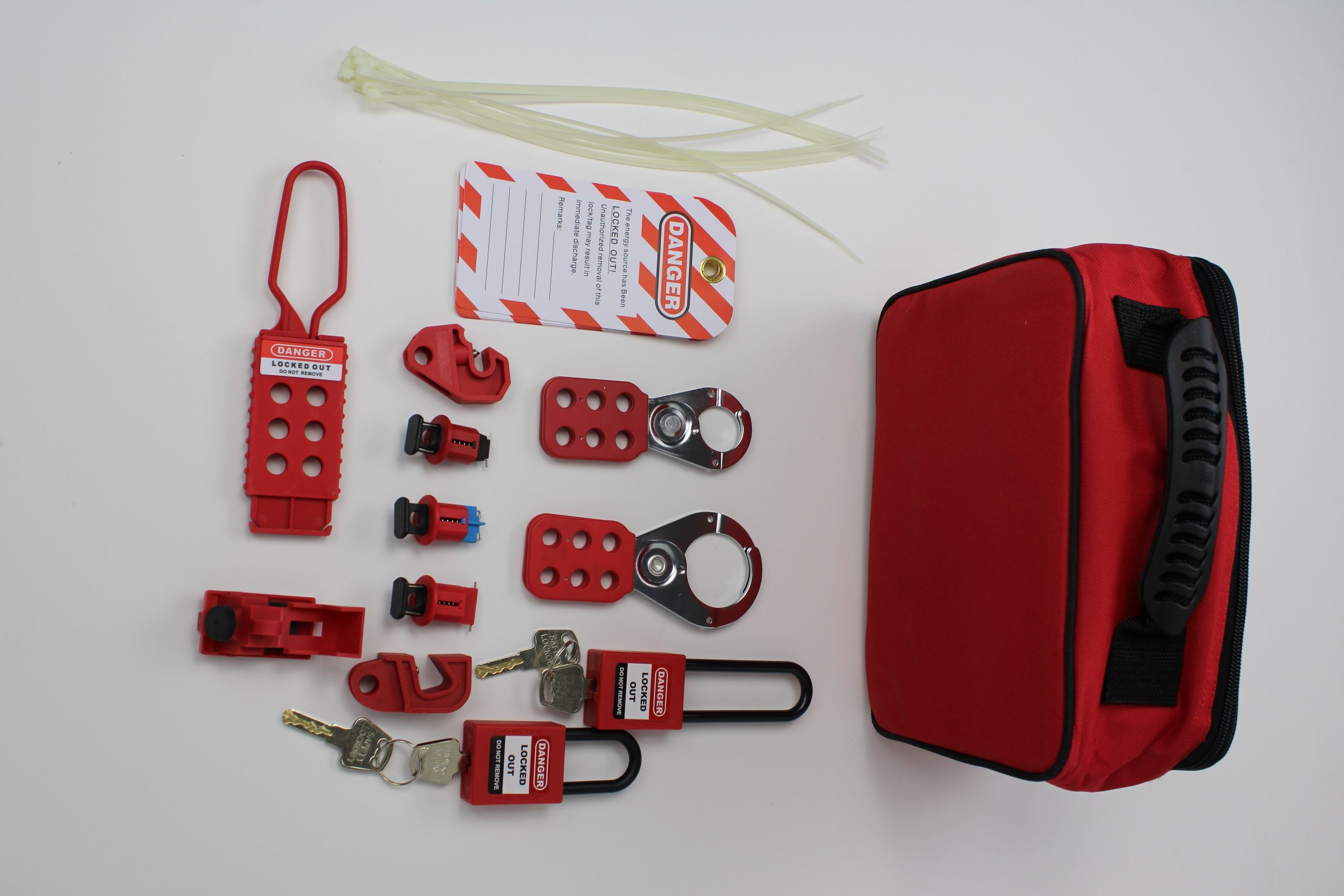
There’s no universal kit, but OSHA-compliant kits follow strict logic: isolate, secure, tag, verify. Here’s what a comprehensive electrical LOTO kit typically includes—and why each item matters.
| Item | Purpose | Real-Use Example |
|---|---|---|
| Circuit breaker lockouts (sliding and lever types) | Prevents reset of breakers during maintenance | Used on 480V disconnects in motor control centers |
| Electrical padlocks (7–10 per kit) | Individually assigned locks for authorized personnel | Each technician uses their own lock; removal only by the same person |
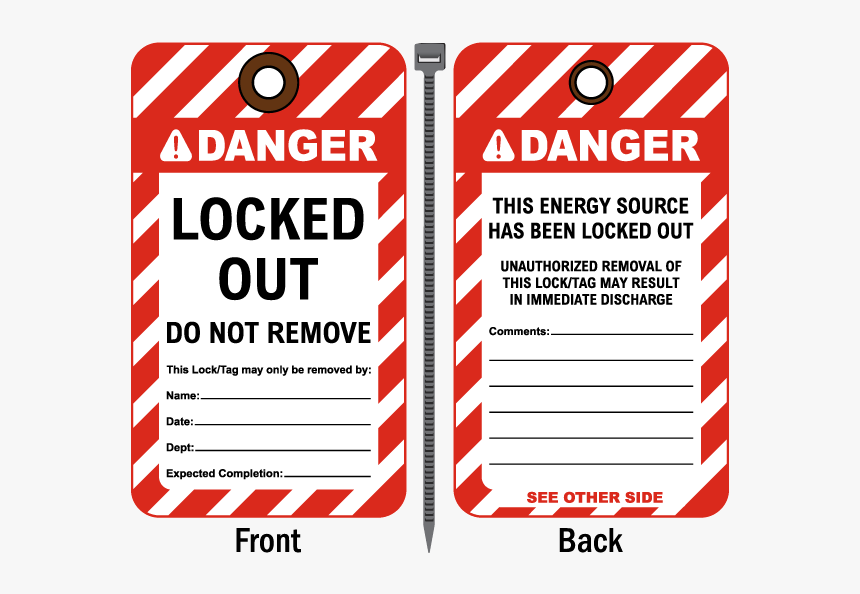
| Tagout tags (dual language, weather-resistant) | Communicates danger and work status | Tags list worker name, department, date, and reason |
| Lockout hasps and group lockout boards | Enables multiple locks on single isolation point | Maintenance team locks out a transformer with 5 individual locks |
| Voltage testers (CAT III/CAT IV rated) | Confirms absence of voltage before work | Verified on phase-to-phase and phase-to-ground |
| Insulated cable lockouts | Secures plug-in disconnects and fused switches | Used on plug-in disconnects for HVAC units |
| Master key management sleeve | Secures spare keys when needed | Used only under documented procedures, never left unattended |
A common mistake? Using cheap, non-compliant locks or generic tags. OSHA requires locks to be distinctive—usually red with bold “DO NOT OPERATE” text—and non-replaceable without tools. Tags must be durable and tamper-resistant.
Another pitfall: assuming one-size-fits-all. A facility with both high-voltage switchgear and low-voltage control circuits needs a tiered kit—possibly multiple kits—tailored to voltage levels and access points.

Choosing the Right Kit for Your Environment
Not all electrical environments are equal. A data center with isolated UPS systems has different needs than a steel mill with 15kV switchgear. Your LOTO kit must reflect the hazards present.
Low-Voltage vs. High-Voltage Kits
- Low-voltage (under 600V): Focus on circuit breaker lockouts, plug lockouts, and small group hasps. Common in commercial HVAC, office switchgear, and light industrial lines.
- High-voltage (600V+): Requires arc-flash-rated gear, bolt-style lockouts, danger tags with enhanced visibility, and strict verification protocols. Found in substations, power generation, heavy manufacturing.
Some facilities maintain separate kits by department. A maintenance team in a chemical plant might carry a portable LOTO kit with explosion-proof tags and non-sparking tools, while electrical engineers use a master station kit near the main distribution board.
Portable vs. Stationary Kits
- Portable kits (backpacks or rolling cases) are ideal for mobile technicians. They’re compact but must include full verification tools.
- Stationary kits (wall-mounted cabinets) serve as central hubs, often with inventory tracking and training materials. Best for large teams or fixed work zones.
The key is accessibility. If the kit is locked in an office or missing critical items, workers will improvise—often with tragic results.
Top 5 Electrical Lockout Tagout Kits in 2024
While customization is essential, pre-packaged kits from reputable suppliers offer a solid foundation. Here are five widely trusted options, each suited to different environments:
- Grace Industries GRI-42512 Electrical LOTO Kit
- - Best for: Heavy industrial and utility environments
- - Includes: 10 padlocks, 10 tags, breaker lockouts, hasp, voltage tester
- - Durable, water-resistant case with OSHA-compliant labeling
- - Pros: Comprehensive, rugged, field-tested
- - Cons: Expensive for small teams
- SafelyNow SN-ELEC1 Pro Kit
- - Best for: Multi-craft teams and facilities with mixed voltage
- - Includes: Lockout stations, portable bag, digital tag templates
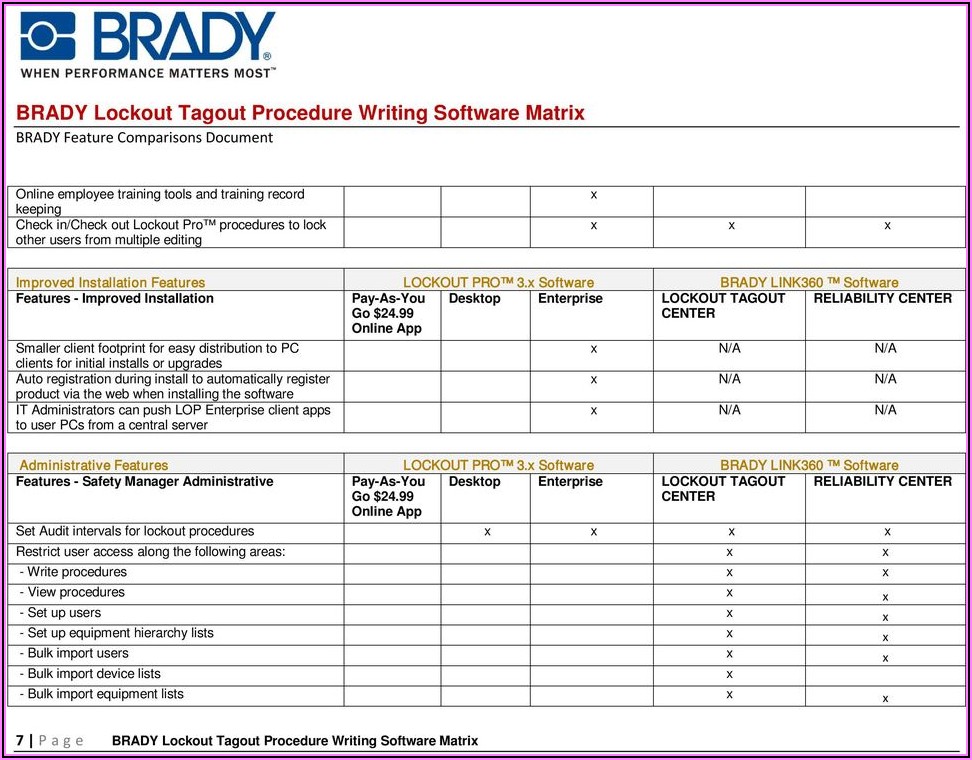
- - Offers companion LOTO software for audit trails
- - Pros: Tech-integrated, scalable
- - Cons: Requires training on digital system
- Seton 690011 Master Lockout Kit
- - Best for: General manufacturing and HVAC
- - Includes: 6 locks, 10 tags, hasp, plug lockouts, breaker devices
- - Affordable and widely available
- - Pros: Budget-friendly, OSHA-aligned
- - Cons: Lacks high-voltage accessories
- Jonard Tools LOK-500 Electrician’s Kit
- - Best for: Electricians and field service teams
- - Compact belt-bag design with insulated tools
- - Includes CAT III voltage tester and mini lockouts
- - Pros: Portable, practical
- - Cons: Limited group lockout support
- Master Lock 1460KIT500
- - Best for: Facilities with standardized LOTO programs
- - Modular system with refillable tags and locks
- - ANSI/ISEA compliant, UV-resistant materials
- - Pros: Excellent durability, refillable
- - Cons: Basic configuration may need expansion
No kit is perfect out of the box. Always audit your site’s electrical points of isolation and customize accordingly.
Common LOTO Mistakes That Disable Protection
Even with a well-stocked kit, human error undermines safety. These are the most frequent—and most dangerous—mistakes:
- Skipping voltage verification: Assuming a breaker is dead without testing. Always use a known-good tester on a live source first, then test the target, then re-check the tester.
- Using “buddy lockout”: One person applies locks for the entire team. Violates the “authorized employee” rule—each worker must apply their own lock.
- Ignoring stored energy: Not discharging capacitors or relieving pneumatic/hydraulic pressure downstream.
- Poor tag quality: Faded, handwritten, or generic tags that don’t specify who is working or why.
- Leaving kits incomplete: Forgetting tags or testers because they weren’t restocked after last use.
A 2022 NIOSH report found that 43% of LOTO violations involved missing personal locks or incomplete tagging. These aren’t minor slips—they’re precursors to incidents.
Integrating the Kit into Daily Workflow
A kit on the shelf does nothing. It must be part of a living safety system.
Start by mapping every electrical isolation point in your facility. Label each with a LOTO station number. Then build standard operating procedures (SOPs) for each piece of equipment:
- Shut down equipment via normal controls
- Isolate all energy sources (electrical, mechanical, pneumatic)
- Apply personal lock and tag
- Verify zero energy state (test every conductor)
- Proceed with work
- Remove lock only after cleanup and system check
Train all authorized employees—not just electricians. Include machine operators, HVAC techs, and contractors. Conduct quarterly drills and unannounced audits.
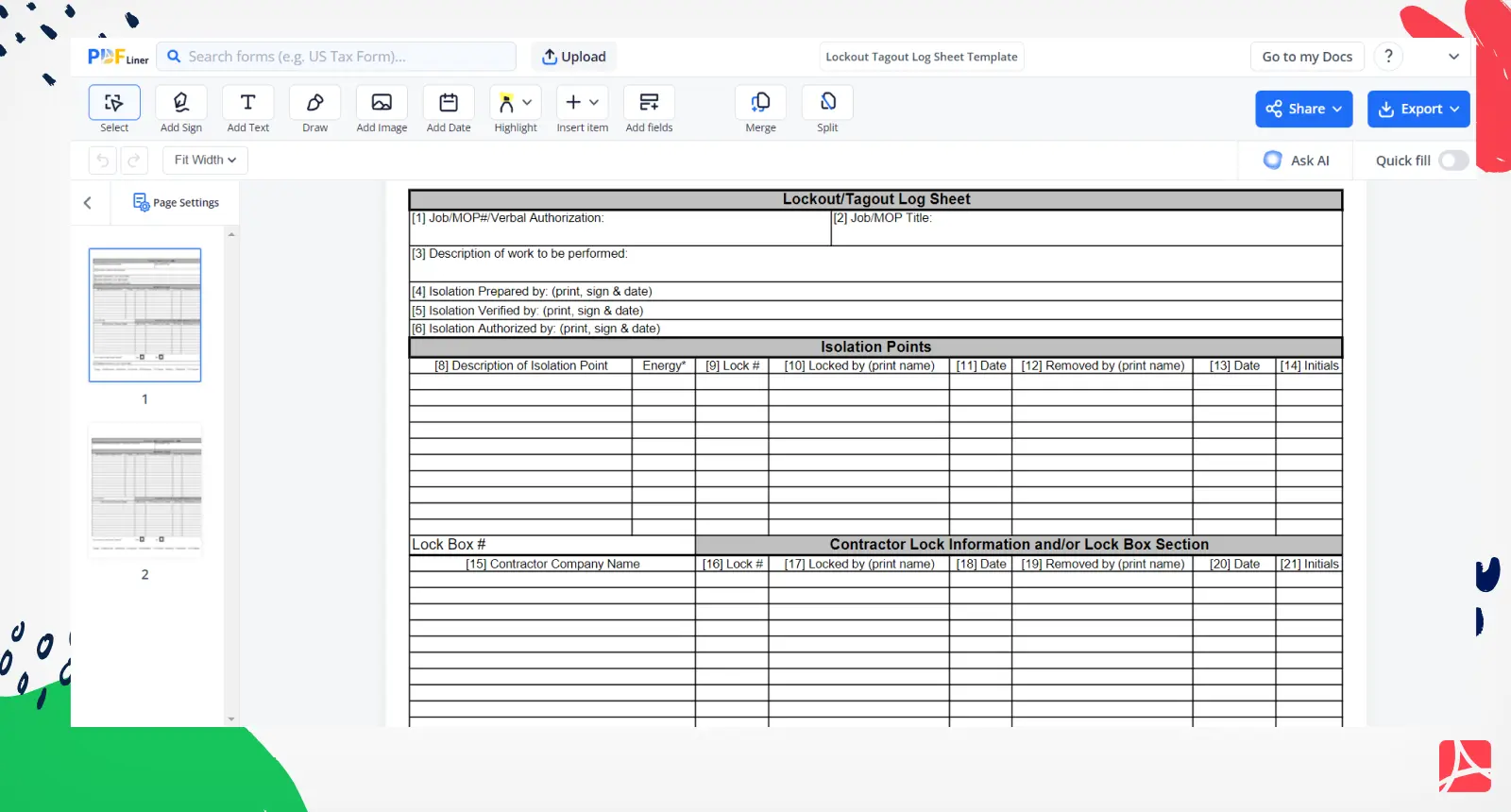
Use the kit as a control point. Require sign-out logs. Monitor usage. Replace damaged or missing components immediately.
The Bottom Line: A Kit Is Only as Strong as Its Use
An electrical lockout tagout kit is more than a collection of locks and tags. It’s a system of accountability. It forces deliberate action in high-risk moments. It gives every worker the authority—and the toolset—to say, “I won’t work until it’s safe.”
But gear alone doesn’t save lives. Culture does. Procedures do. Consistency does.
If your kit is buried in a cabinet, missing voltage testers, or used inconsistently, upgrade it—then retrain, audit, and enforce.
Because in the split second between a flipped breaker and a fatal shock, the right kit in the right hands is the only thing standing between routine maintenance and catastrophe.
Action Step: Audit your current LOTO setup this week. Check for missing items, expired tags, and untrained personnel. Replace what’s deficient. Test your procedures with a mock lockout. Safety isn’t a one-time purchase—it’s a daily practice.
FAQ
What is the main purpose of an electrical lockout tagout kit? It ensures electrical systems are fully de-energized and cannot be re-energized during maintenance, protecting workers from electrocution and arc flash.
Can I use a generic lock instead of a LOTO-specific padlock? No. OSHA requires locks to be standardized, identifiable, and used only for safety. Generic locks don’t meet these criteria and may compromise compliance.
How many tags and locks should a kit have? Minimum of one lock and tag per authorized worker. Most industrial kits include 5–10 locks with extras for contractors or multi-person jobs.
Do I need a voltage tester in the kit? Yes. Verification of zero energy is required by OSHA before work begins. A CAT III or CAT IV rated tester is essential for electrical systems.
Are digital tags allowed under OSHA? Only if they’re as durable and visible as physical tags. Most inspectors still require a physical tag with the worker’s name, date, and purpose.
Who is responsible for applying a lockout device? Each authorized employee performing servicing must apply their own lock. No one else can remove it.
Can a single lockout kit serve an entire plant? Only if it’s duplicated or distributed. Kits must be accessible at or near the point of isolation. Remote or delayed access defeats the purpose.
FAQ
What should you look for in Electrical Lockout Tagout Kit: Your Safety Line in High-Voltage Zones? Focus on relevance, practical value, and how well the solution matches real user intent.
Is Electrical Lockout Tagout Kit: Your Safety Line in High-Voltage Zones suitable for beginners? That depends on the workflow, but a clear step-by-step approach usually makes it easier to start.
How do you compare options around Electrical Lockout Tagout Kit: Your Safety Line in High-Voltage Zones? Compare features, trust signals, limitations, pricing, and ease of implementation.
What mistakes should you avoid? Avoid generic choices, weak validation, and decisions based only on marketing claims.
What is the next best step? Shortlist the most relevant options, validate them quickly, and refine from real-world results.